What letter sound cards are (and why they work)
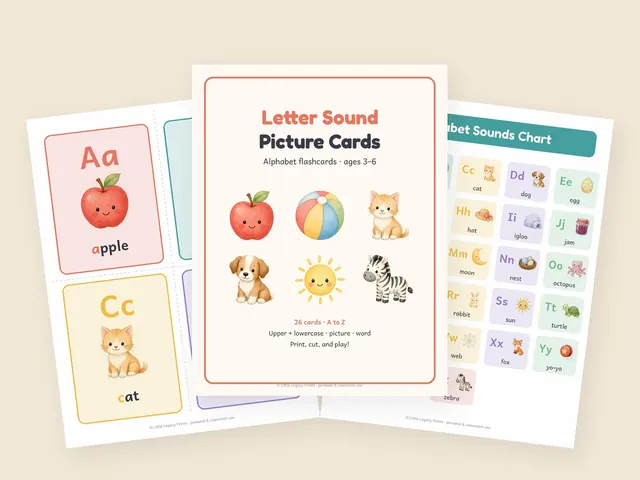
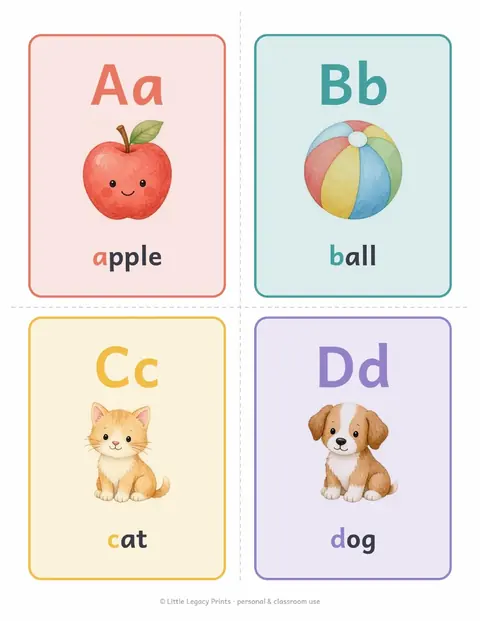
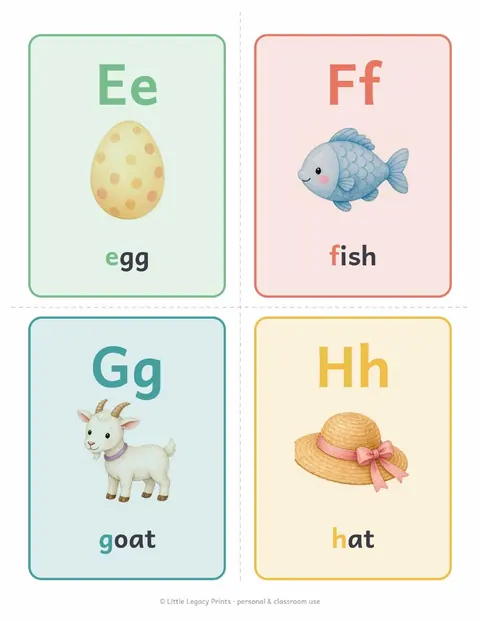
Most kids learn the alphabet song long before they know what each letter says. Letter sound cards close that gap. Each card shows the uppercase and lowercase letter, a picture, and a key word with the first letter highlighted: Aa apple, Bb ball, Cc cat. Every time your child sees the card, they hear the sound and see the shape together.
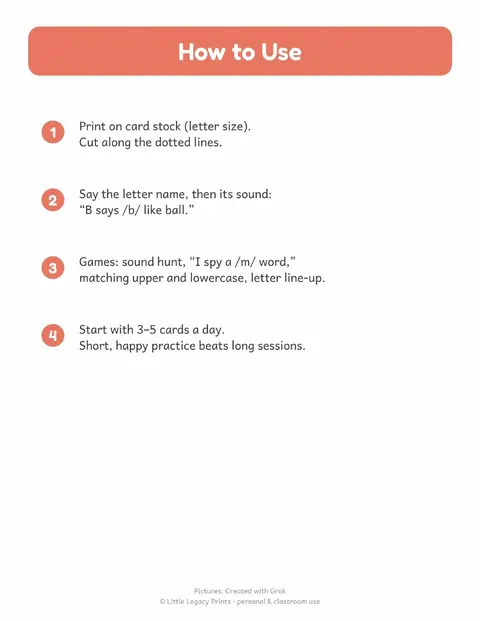
Keep it short and happy. Three to five new cards a day is plenty for most 3 to 5 year olds. Say the letter name, then the sound: “B says /b/, like ball.”
5 games to play with the cards
1. Sound hunt
Pick a card and hunt the house for things that start with that sound. Bring three back to the table. Bonus points for silly finds.
2. I spy
Lay out 4 to 6 cards. “I spy something that starts with /m/.” Your child taps the right card, then gets to be the spy.
3. Upper and lowercase match
Cut a few cards in half between the big and small letters. Mix them up and match the pairs back together.
4. Mystery bag
Put a small toy in a bag. Your child feels it, guesses it, then finds the card for its first sound.
5. Letter hopscotch
Tape cards to the floor. Call a sound and they hop to it. Great for wiggly afternoons and rainy days.
Printing tips
Use card stock if you can
65 to 110 lb card stock makes cards that survive little hands. Plain paper works too for a quick start.
Print at “actual size” or “fit to page”
The file is US Letter. On A4 paper, choose “fit to page” so nothing gets cut off.
Cut along the dotted lines
Four cards per page. A paper trimmer is fastest, but scissors are fine.
Laminate the favorites
Laminated cards wipe clean and work with dry-erase markers for tracing practice.
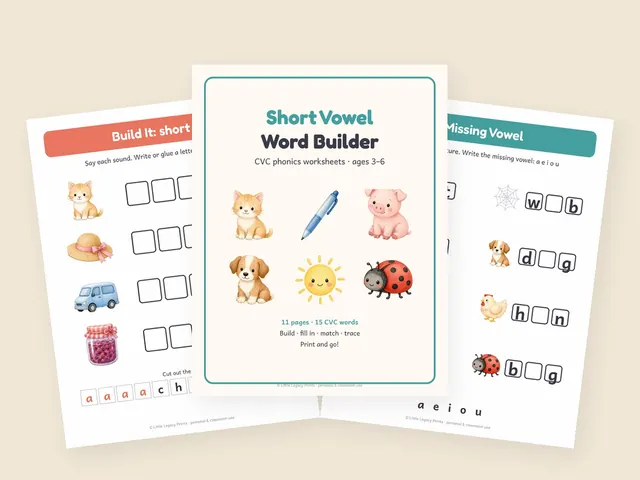
Ready for the next step? Once your child knows most sounds, move on to blending them into words with our free CVC word builder worksheets.
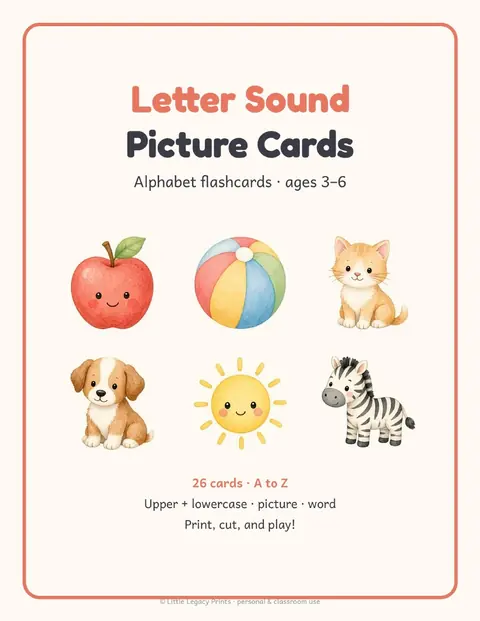
What's inside the PDF
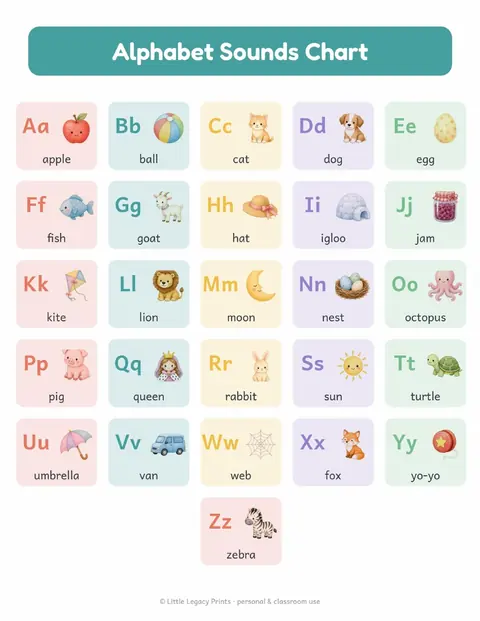
Every page below is a preview straight from the PDF you'll print.
Questions parents ask
What age are letter sound cards for?
They work best for ages 3 to 6: preschool, pre-K and kindergarten. Older kids who are still learning English or need extra phonics practice can use them too.
Should I teach letter names or letter sounds first?
Many families do both together. Say the name, then the sound: “M says /m/.” The sound is what helps most when kids start reading words.
Which letters should I start with?
Start with letters in your child’s name, or common ones like s, a, t, m, p and i, which build lots of short words quickly.
Can I use these in my classroom?
Yes. The cards are free for personal, homeschool and single-classroom use. Please share the link to this page instead of the file.